
Emergency Water Damage Restoration Olympia WA
Precision Moisture Mitigation And Framing Recovery
A pattern echoed in public discussions is that severe water intrusion compromises interior home framing, leaving property owners in need of repairs for ruined drywall, subflooring, and joists.
About 24% of housing units locally (6,317 of 25,870) were built before 1960, the era of galvanized steel supply lines and cast iron drains.
About 8% of housing units in the area (2,058 of 25,870) were built in the 1960s, overlapping the years aluminium branch wiring was installed.
About 29% of housing units in the local market (7,572 of 25,870) were built in the 1970s and 1980s, overlapping the years polybutylene supply piping was commonly installed.
About 62% of housing units across the community (15,947 of 25,870) were built before 1980, the period when asbestos-containing materials and lead paint were still in use.
Our technicians quickly stabilize building envelopes and mitigate exterior storm damage before water spreads into finished interior living areas.
How We Remediate Severe Structural Water Losses
Our methodical response protocol contains active moisture, traces hidden migration paths behind walls, and restores structural materials efficiently.
- Thermal Moisture Tracing. Homeowners often describe how damp spots blooming on drywall ceilings after storms require prompt moisture tracing and structural drying before secondary mold can take hold.
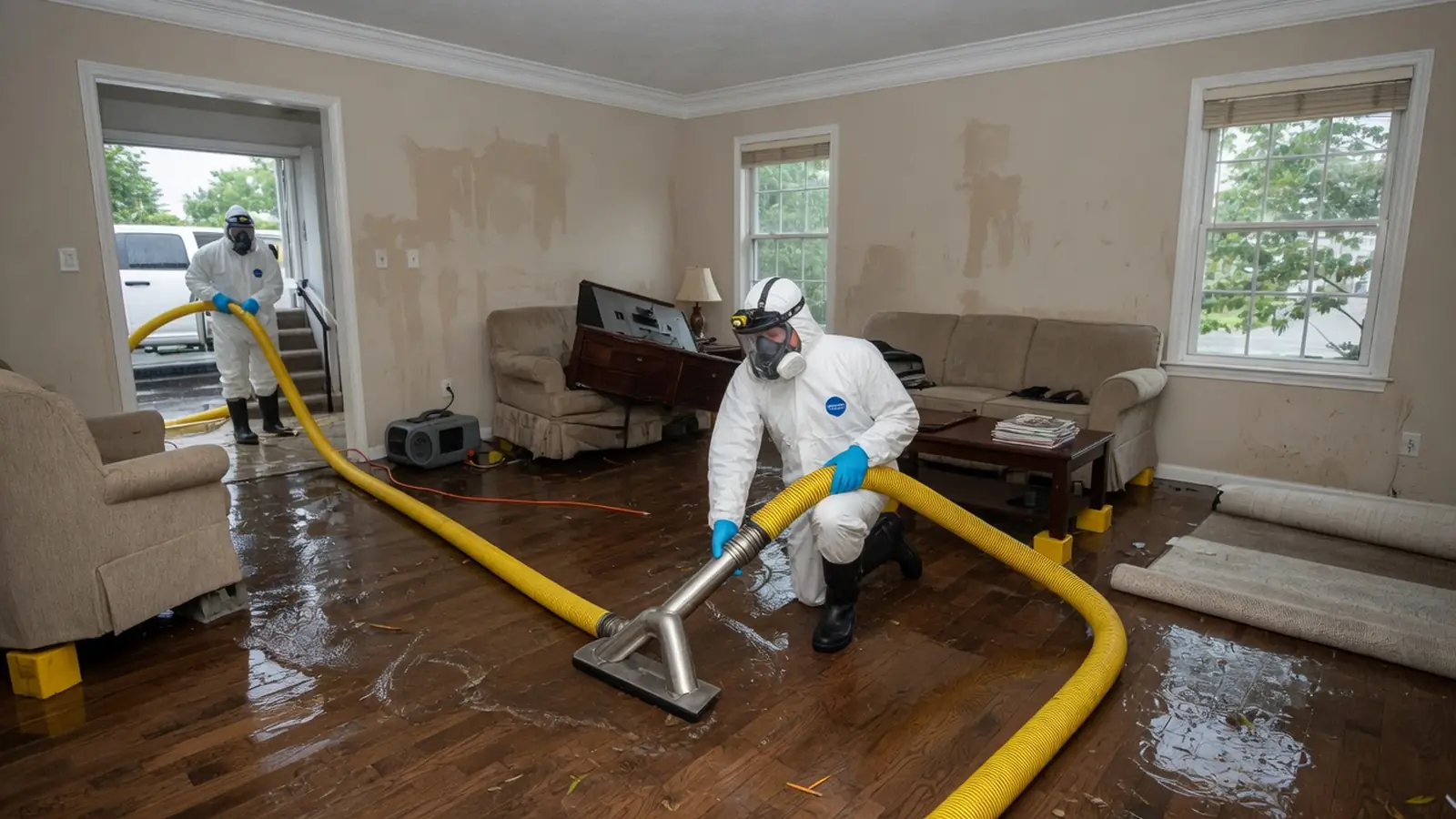
- Water Extraction And Structural Containment. Technicians set commercial extractors to pull pooled water and extract standing crawl space water and dry subfloors before decay compromises load-bearing framing.
- Controlled Demolition And Isolation. As trade video demonstrations emphasize, establishing containment zones before tearing out water-damaged subfloors, vinyl, and drywall prevents moisture and demolition debris from migrating to unaffected rooms.
- Deep Dehumidification And Monitoring. We deploy high-capacity LGR dehumidifiers and air movers, recording daily moisture pin readings until every timber framing member matches pre-loss baseline dry standards.
Our Ironclad Containment And Mitigation Standards
Severe windstorms and torrential rains cause sudden flashing failures that allow water to penetrate living spaces and damage ceilings. Our technicians apply botanical sanitizers to prevent structural fungal growth through professional mold remediation while managing controlled environmental drying.
Emergency Structural Drying
When roof leaks or plumbing lines fail, rapid containment stops moisture from penetrating framing members. We utilize commercial air movers and desiccant units to dry saturated subflooring, wall studs, and ceiling assemblies.
Ceiling And Flashing Leak Repair
Severe windstorms and torrential rains cause sudden flashing failures that allow water to penetrate living spaces and damage ceilings. Our crew isolates the saturated plaster and drywall, extracts standing water, and stabilizes framing beneath roof penetrations.
Hail Impact And Storm Mitigation
NOAA radar recorded 2 hail signatures within about 15 miles of the city center between 2021-2025 (2021: 0, 2022: 0, 2023: 2, 2024: 0, 2025: 0). The heaviest recent hail year around the local area was 2023, with 2 radar hail signatures inside a 15-mile radius. We trace storm penetrations immediately to secure structural envelopes.
Dedicated Emergency Restoration Standards
When moisture strikes structural framing and interior finishes, rapid mitigation is critical to protecting building integrity. Our certified technicians maintain rapid response readiness with specialized extraction, moisture detection, and controlled drying equipment to return properties to safe, pre-loss conditions.
- 12Zip Codes Served
- 6Service Areas
- 3Services Offered
Homeowners across the region count on our rapid response when burst pipes, roof failures, or unexpected plumbing disasters compromise their living spaces. Here is what real property owners have shared about how the team handled urgent extraction, structural containment, and property recovery.
“A torrential downpour hit right as equipment was arriving, turning our sloped driveway into an impassable mud slick. The crew immediately adapted by staging smaller extraction units along the retaining wall and worked through the night to catch up on the structural drying timetable. Everything was completely back on schedule before the drywall inspections.”
Marcus T.
“Our townhouse board was immediately concerned about heavy industrial dehumidifiers running continuously in the shared driveway breezeway. The team met directly with the property manager to route power cables discreetly and set sound-baffling panels that kept exterior noise well under local decibel limits. Their courtesy saved us from receiving any neighbor disputes or association fines.”
Elena V.
“Six months have passed since our kitchen subfloor was flooded by a ruptured main supply pipe. We have experienced zero lingering musty smells, no floorboard buckling, and our follow-up moisture readings stayed completely flat through the dampest winter weeks. Living in the home now feels just as solid and clean as it did before the pipe burst.”
Garrett K.
“Navigating emergency cleanup while caring for my elderly mother and two skittish rescue cats felt overwhelming until these technicians stepped in. The crew sealed off the damaged wing with airtight zipper doors and kept high-traffic hallways completely clear of hoses so my mother could use her walker safely. Their patience and thoughtful setup gave our entire family incredible peace of mind.”
Brenda H.
Frequently Asked Questions
How long does structural water damage drying usually take?
Emergency structural drying typically takes three to five days depending on building materials, moisture saturation levels, and humidity conditions. Dense hardwood joists and multiple layers of subflooring require sustained dehumidification and constant air movement. Technicians monitor daily moisture readings to verify framing has returned to equilibrium before authorizing structural reconstruction.
Does homeowners insurance cover sudden water intrusion and ceiling leaks?
Standard property insurance policies usually cover sudden pipe bursts, while unaddressed ongoing seepage is regularly denied by adjusters. Sudden storm-driven flashing failures and abrupt plumbing breaks qualify as sudden and accidental losses. Restoration contractors provide comprehensive photo documentation and psychrometric logs directly to insurance adjusters to support property claims.
What factors determine the total cost of emergency water restoration?
Restoration costs range from two thousand to nine thousand dollars based on extraction needs, drywall replacement, and structural framing repairs. The classification of water, whether clean supply line water or greywater, heavily influences remediation protocols. Extensive tear-out of subfloors or specialized drying chamber containment will also impact overall project investment.
How do technicians detect hidden moisture behind walls and ceilings?
Technicians use thermal cameras, invasive pin meters, and non-penetrative scanning devices to map moisture pathways through wall cavities. Thermal imaging highlights evaporative cooling patterns that identify water pockets without cutting drywall. Pin meters subsequently verify electrical resistance across studs and joists to ensure structural drying targets are met.
Why is containment critical during water damage demolition in older homes?
Containment barriers and air scrubbers prevent hazardous lead dust and asbestos fibers from circulating during demolition in older structures. About 62% of housing units across the community were built before 1980 when hazardous materials were standard. Heavy plastic sheeting under negative pressure protects living spaces while water-damaged drywall and subflooring are dismantled.