
Olympia Storm Damage
Dedicated Storm Recovery Specialists
The median owner-occupied home locally was built in 1981 (Census ACS 5-year), presenting aging rooflines and established foundations that face severe seasonal downpours.
About 22% of housing units locally (5,794 of 25,870) were built since 2000, so a substantial share of the local stock is still on its original systems.
When intense precipitation strikes, our technicians deliver emergency water damage restoration for flooded structures to stop framing decay immediately.
Homeowners suspect crawl space drainage and moisture problems but worry about high-pressure sales tactics pushing unnecessary complete encapsulation, which is why we focus strictly on honest diagnostics and direct water removal.
Our technicians evaluate exterior envelope breaches, pump bulk pooling, and deploy industrial dehumidifiers to stabilize structural wood.
How We Restore Storm Damage
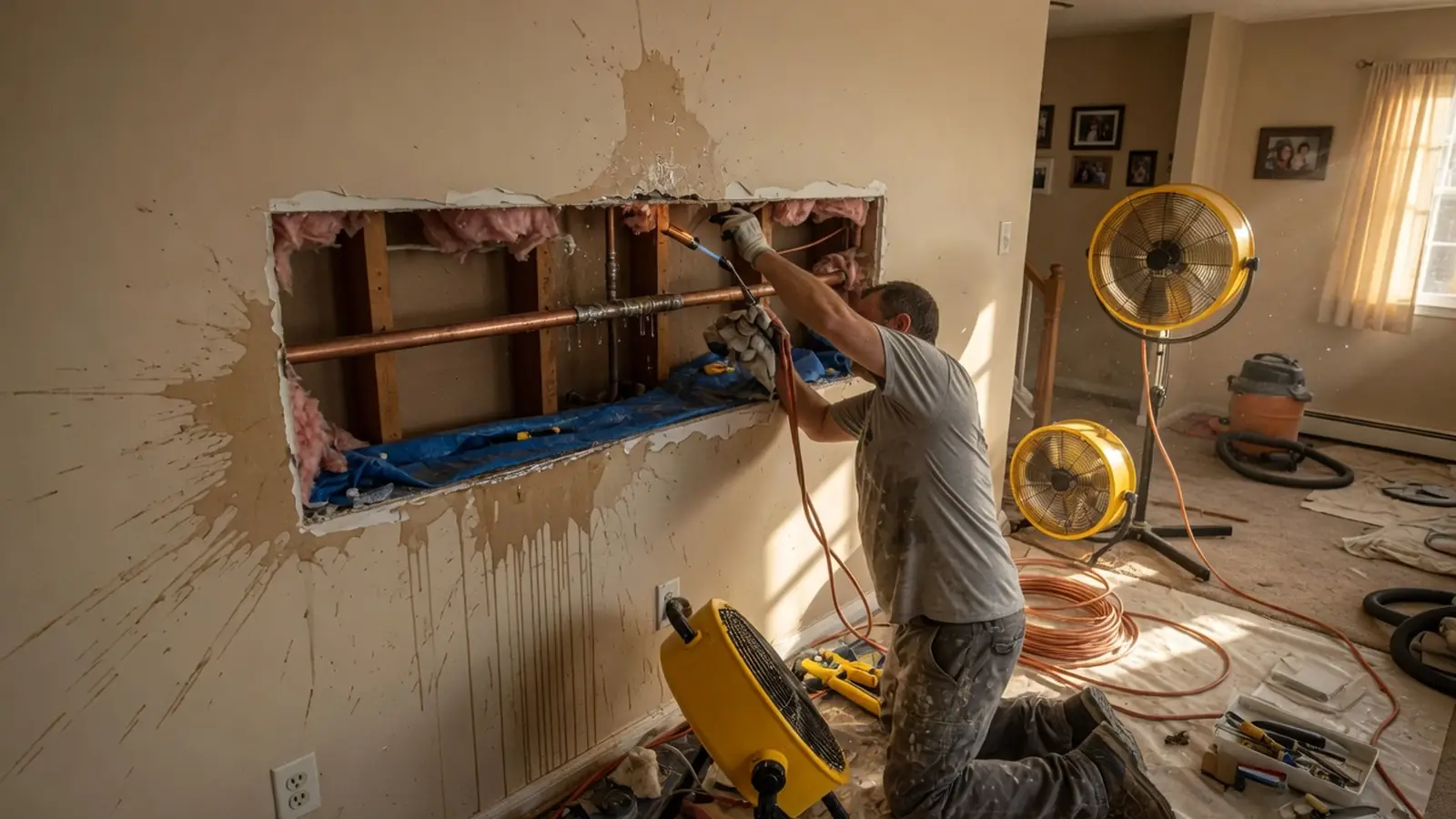
Our systematic restoration workflow halts active moisture intrusion, detects hidden moisture pockets, and thoroughly dries structural framing.
- Envelope Containment. Storm crews prioritize exterior envelope containment like roof tarping and window board-up before staging dehumidification to halt active moisture intrusion.
- Cavity Moisture Detection. As trade video diagnostics demonstrate, post-storm ceiling spots are often surface symptoms of larger water pockets trapped behind wall cavities that require moisture detection before structural drying can begin.
- Targeted Thermal Drying. Delaying response to small ceiling leaks after storms allows water to migrate behind walls and saturate insulation, creating an active mold environment within days, so professional mold remediation removes fungal colonies before spores circulate into the living space.
- Structural Verification. We verify that relative humidity and framing moisture percentages have returned to dry standards, completing daily documentation until all structural elements are certified dry.
Our Restoration Commitment
We adhere to professional structural drying standards without taking shortcuts or recommending unwarranted structural gutting. When wind-driven runoff saturates ground-level vents, learn more about pumping standing crawl space water to protect your foundation from wood decay. Our technicians document dryout progress with precision equipment every single day until your home reaches pre-loss moisture equilibrium.
Wind And Hail Response
Hail activity across our area is uneven year to year: 2023 logged 2 radar signatures while 2021 logged only 0, a 2.0x spread. We inspect battered shingles, seal impact punctures, and stabilize roofs before rainfall penetrates decking.
Structural Flood Extraction
Heavy runoff can submerge basements, living areas, and crawl spaces within hours. We deploy commercial extraction equipment to remove standing water quickly, sanitize contaminated surfaces, and stage industrial air scrubbers.
Moisture Mapping And Drying
Hidden moisture pockets inside insulated wall cavities cause dangerous rotting if left unaddressed. We utilize thermal imaging to trace saturation pathways and set up targeted dehumidifiers to thoroughly dry wood framing.
Dedicated Storm Restoration Standards
Our technicians follow rigorous drying protocols to stabilize storm-damaged properties. We focus on rapid water extraction, thorough moisture mapping, and careful structural drying so every affected building material is safely returned to pre-loss condition.
- 10Zip Codes Served
- 6Service Areas
- 3Services Offered
Real feedback from local property owners who experienced emergency storm mitigation and drying with our team.
“Our roof began leaking late on a Saturday night during a ferocious atmospheric river storm. The crew dispatched a technician right away to secure a heavy tarp over the damaged ridge before interior flooding spread. Having someone answer our call immediately and arrive within an hour saved our living room ceiling.”
Marcus T.
“Every evening before heading out, the crew swept up drywall fragments, stacked their air movers neatly, and sealed the work zone with plastic sheeting. They made sure our hallway was completely clear and safe for our kids to walk through each night. It was impressive how clean and organized they kept the house despite all the chaotic structural drying underway.”
Brenda K.
“I received clear photo updates and text messages each morning detailing the moisture meter numbers across our wall framing. The team proactively kept me in the loop on drying progress without me ever having to hunt down a supervisor. That transparent daily communication took all the anxiety out of the insurance documentation process.”
Darren S.
“Instead of ripping out all of our lower hardwood, the team demonstrated how targeted floor drying mats could salvage the subfloor beneath. They explained which insulation batts had to be replaced for mold safety and where we could safely preserve structural framing. Their practical guidance saved us thousands of dollars compared to a full demolition.”
Elena V.
Frequently Asked Questions
Does stormwater entering from an overflowing yard or street qualify as Category 3 black water that requires discarding contaminated porous materials?
Yes, surface runoff from streets or overflowing yards is Category 3 black water and requires discarding contaminated porous materials. Because ground runoff collects biohazards, silt, and chemicals, saturated drywall, insulation, and padded carpeting cannot be safely sanitized and must be removed to protect indoor air quality.
How quickly does structural drying take after storm flooding?
Standard structural dryout after severe storm flooding typically requires three to five days under commercial dehumidification. Heavily saturated framing studs, dense hardwood flooring, or multi-layer subfloors may require additional monitoring days until moisture meters confirm baseline readings.
What should homeowners do immediately after a tree punctures their roof?
Homeowners should evacuate the impact zone immediately, shut off main electrical breakers if safe, and request emergency exterior tarping. Securing the outer envelope prevents rainwater from saturating attic insulation and spreading down interior wall cavities before structural assessment.
How do technicians find water trapped behind finished ceilings and walls?
Restoration technicians utilize non-invasive thermal imaging cameras and calibrated pinless moisture meters to map hidden moisture pockets. This precision diagnostic approach pinpoints exact saturation boundaries so drying equipment can be positioned without tearing down undamaged drywall.
Does homeowner property insurance cover seasonal storm flooding?
Standard homeowner insurance policies cover sudden roof punctures or wind-driven rain but exclude rising ground floodwater without riders. Technicians compile photographic logs and drying logs to help property owners submit clear proof of loss to adjusters.