
Olympia Mold Remediation
Comprehensive Remediation And Moisture Control
Our certified technicians specialize in containing fungal contamination and eliminating hidden dampness throughout residential properties.
Across the municipality, 25,870 housing units on record in the Census ACS 5-year estimates face these sustained seasonal dampness challenges.
About 62% of housing units locally (15,947 of 25,870) were built before 1980, the period when asbestos-containing materials and lead paint were still in use, requiring containment protocols that protect indoor air quality during remediation.
The region's maritime winter climate keeps indoor relative humidity elevated, allowing dormant mold spores to colonize damp drywall within 24 to 48 hours.
When excess moisture triggers rapid bacterial or fungal growth, prompt dispatch of emergency water extraction and structural drying services prevents widespread structural degradation.
Homeowners often describe how mold can still spread across floor joists in an encapsulated crawl space with an active dehumidifier if unresolved bulk moisture intrusion persists.
A common pattern echoed in public discussions is that new homeowners in rainy regions are uncertain whether seasonal crawl space pooling is normal or indicates defective perimeter foundation drainage.
Every project concludes with thermal imaging moisture mapping and physical air barrier checks to guarantee your living environment remains dry.
Step-by-Step Fungal Abatement And Wood Treatment
Our certified remediation process controls microscopic contaminants at the source, preventing cross-contamination while drying damp structural timber.
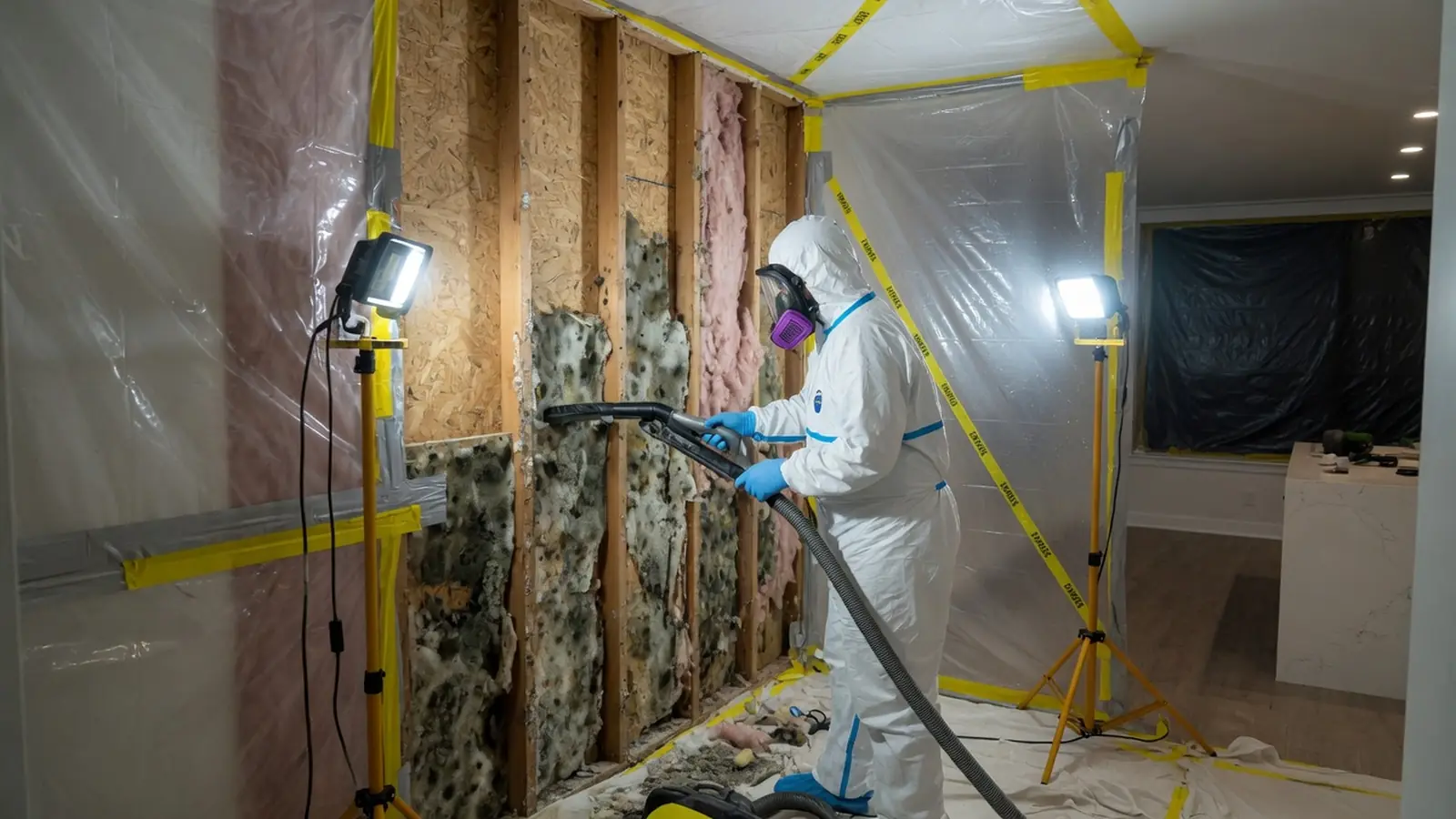
- Containment And Air Scrubbing. Certified mold remediation requires isolating work zones with 6-mil poly containment and HEPA-filtered negative air machines before disturbing fungal growth.
- Moisture Diagnosis And Source Repair. Technicians isolate the source of moisture intrusion by resolving standing crawl space water accumulation before sanitizing framing timber.
- Saturated Material Extraction. A burst water pipe in a crawl space saturates subfloor insulation and causes mold growth on framing that requires safe removal and antimicrobial treatment.
- Deep Wood Cleaning And Encapsulation. When residents struggle to identify whether standing water under their house is driven by seasonal groundwater infiltration or a concealed plumbing supply leak, our crew tracks the moisture gradient to its origin.
Proven Structural Drying And Wood Protection
Our protocol for restoring structural cavities after severe storm damage combines physical barrier containment with medical-grade air scrubbing to protect family health. As trade professionals frequently observe, kitchen water damage frequently migrates beyond the source into adjacent bedrooms, escalating standard drying into multi-room drywall and flooring structural rebuilding. We ensure every porous timber element is thoroughly scrubbed, treated with EPA-registered antimicrobials, and sealed with commercial polymer encapsulant to prevent fungal recurrence.
Crawl Space Subfloor Decontamination
We clear compromised insulation, sanitize damp floor joists, and establish heavy vapor barriers to prevent fungal colonization beneath your subfloor. Our team ensures complete structural drying before any wood sealing takes place.
Ceiling And Wall Cavity Remediation
Damp spots blooming on drywall ceilings after storms require prompt moisture tracing and structural drying before secondary mold can take hold. We deploy precision dehumidification to extract trapped moisture from hidden wall assemblies.
Antimicrobial Wood Encapsulation
Spraying household bleach is insufficient for porous framing lumber, so we apply industrial antimicrobial encapsulants that physically seal the wood grain. This durable barrier prevents dormant fungal spores from returning when ambient humidity fluctuates.
Our Standards In Moisture And Mold Control
We approach every home with uncompromising remediation standards, utilizing calibrated moisture sensors, continuous negative pressure air machines, and EPA-registered encapsulants to ensure durable structural protection.
- 12Zip Codes Served
- 8Service Areas
- 3Services Offered
Homeowners rely on our methodical containment protocols and deep structural drying to restore healthy living environments. Read authentic feedback from local clients who experienced our thorough remediation process firsthand.
“When our shared wall townhouse HOA flagged concerns about venting equipment near common walkways, the crew handled the situation with total professionalism. They rerouted the negative air exhaust smoothly, kept decibel levels whisper quiet, and walked the board president through the entire containment setup. The containment prevented any spore spread, and our neighbors were genuinely impressed with the consideration shown.”
Marcus T.
“Six months after they treated our floor joists and sealed the crawl space, the musty odor that used to rise into our living room has never returned. Our indoor humidity sensors consistently stay in the healthy green range even through torrential winter rainstorms. Living in the home now feels clean and completely dry, which gives us immense peace of mind.”
Elena R.
“Caring for my elderly mother while managing severe fungal growth in her master bath was stressful, but the team went above and beyond to protect her sensitive lungs. They built airtight plastic partitions with zipper doors that kept all dust and spores isolated from her bedroom, and they cleared every hallway before leaving each evening. She never had a single respiratory issue during the three days of remediation.”
Derrick K.
“Another contractor had quoted us a cheap quick fix that amounted to spraying bleach and painting over wet joists. This company explained why surface spraying fails on porous lumber and instead set up proper negative air machines with true antimicrobial encapsulant. Spending a bit more for verified containment saved us from having to redo the entire job a year later.”
Bridget M.
Frequently Asked Questions
Why is spraying household bleach insufficient for porous framing lumber?
Bleach cannot penetrate porous framing lumber to kill deep fungal roots, whereas antimicrobial encapsulants seal timber and stop fungal recurrence. Chlorine bleach only treats superficial discoloration while water soaks deeper into the wood grain. Our technicians physically remove fungal roots and apply commercial encapsulants that bond permanently to structural framing.
How do negative air machines protect living areas during remediation?
Isolating affected spaces with 6-mil plastic barriers and HEPA negative air machines prevents microscopic spores from spreading into clean rooms. The negative pressure machine exhausts filtered air outside, creating continuous inward airflow across the containment barrier so spores cannot migrate through open doorways during demolition.
What should be done when ceiling water spots appear after a heavy storm?
Ceiling water stains after heavy rain require immediate moisture tracing and drying before secondary mold colonies establish in damp drywall. Trapped rainwater between attic insulation and sheetrock provides ideal conditions for rapid fungal growth within 24 to 48 hours unless extracted promptly with professional dehumidifiers.
How does older home construction affect fungal remediation procedures?
In older properties built before 1980, technicians perform careful containment and material screening to avoid disturbing hidden lead or asbestos. Our crew uses certified containment practices to strip contaminated sheetrock and insulation safely without releasing hazardous vintage building dust into the breathing zone.
Why does crawl space framing grow mold even with a dehumidifier running?
Persistent joist dampness occurs when exterior grading, roof runoff, or foundation seepage introduces bulk water faster than dehumidifiers can dry. A mechanical dehumidifier manages ambient air vapor, but standing water pooling against foundation stem walls requires perimeter drainage correction and subfloor sanitization.